
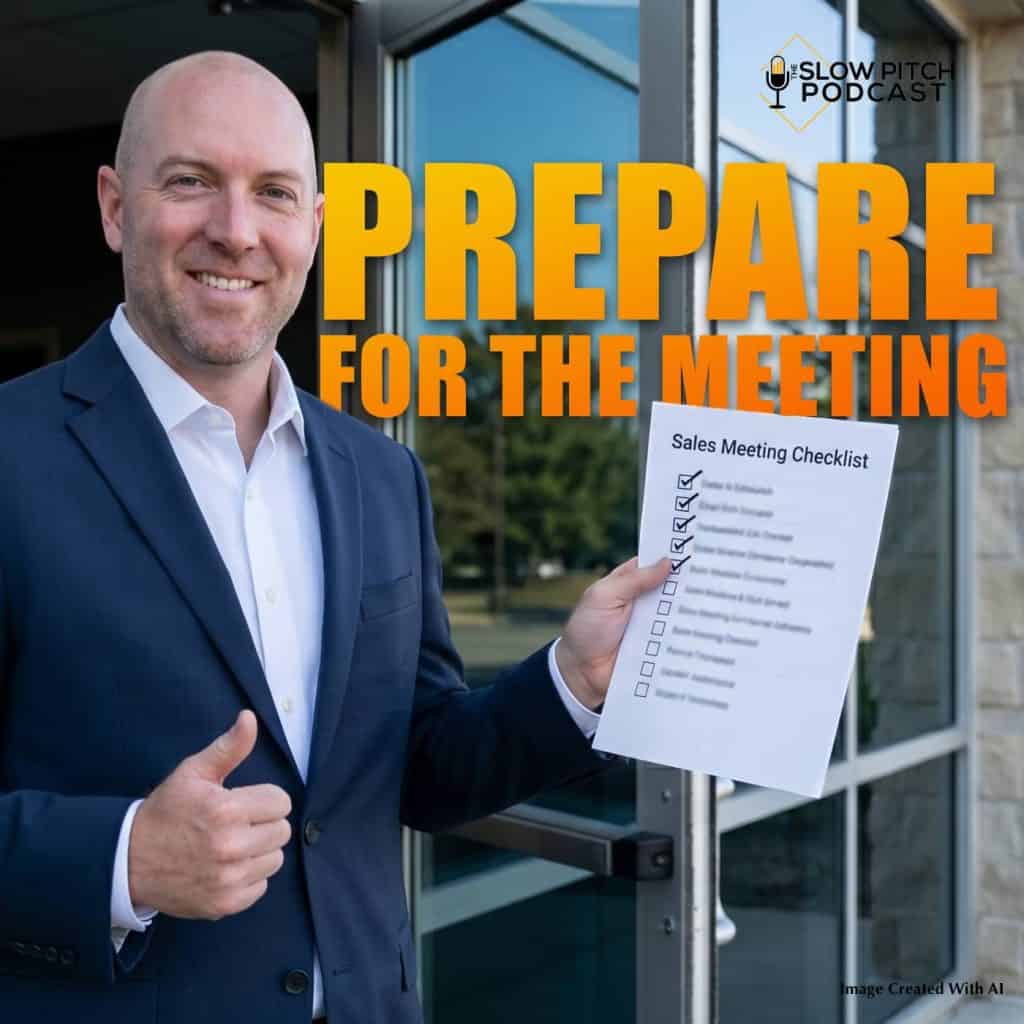
Prep For Your Sales Meeting – This Prep Checklist


Notes
Use a Sales Meeting Prep Checklist
Stop wasting your sales meetings! Most salespeople think they’re ready for their next meeting. They’re not. In this episode of The Slow Pitch Sales Podcast, Rob reveals the exact B2B sales meeting preparation process that separates the reps who walk out with the deal from the ones who walk out wondering what went wrong. This isn’t basic prep, it’s a deep dive into prospect research, DISC personality signals, and the psychology of closing.
Are you really ready for your next sales meeting — or are you just showing up? Most B2B salespeople walk into sales meetings underprepared and don’t even know it. In this episode, Rob breaks down exactly how to prepare for a sales meeting the right way — and it goes way beyond just knowing the basics about the company.
This sales meeting prep checklist will help you walk in confident, ask better sales questions, and dramatically improve your chances of closing more deals.
In this episode you’ll learn:
- How to research a prospect before a meeting — and what most reps completely miss
- Why you should only ask sales questions you already know the answer to
- How to identify the decision makers in a sales meeting and who will help or hurt you
- Why knowing the DISC personality styles of the people in your meeting changes everything
- How to walk into every B2B sales meeting with the right mindset so you never feel like you need the sale
Whether you’re heading into your first meeting with a prospect or your third, this B2B sales meeting preparation checklist will make sure you’re never caught off guard again.
Remember — never go to a sales meeting without taking a shower first.
Keywords: Sales Tips, Sales Training, The Slow Pitch, Sales, Sales Podcast, Service Business, Close More Deals, Salesperson, Mistakes, How to Close Sales, Salesperson Habits, Successful Habits, Habits, Sales Habits, sales problems, sales help, sales training
Welcome to The Slow Pitch Sales Podcast
This is where business owners, sales professionals, and service providers come to sharpen their sales skills and close more deals. Each episode offers clear, no-fluff advice rooted in real-world sales experience and strong sales training principles. Whether you’re new to selling or a seasoned pro, you’ll learn how to ask better questions, uncover real buyer pain, and gain trust faster, while never using high-pressure tactics.
🔔 Subscribe for sales tips, stories, and strategy that actually work — no matter your experience level.
📧 Email us at Questions@TheSlowPitch.com if you have a sales question you want answered!
📞 Call us at (608) 708-7569 (SLOW) to ask your question directly!
Related Links:
Gain Control of the Sales Meeting
Follow Up Email after Sales Meeting when there’s No Response
Start Journaling To Jumpstart Your Selling
Watch this episode on The Slow Pitch YouTube Channel








The Episode
Rob 00:00
Never start a sales meeting without taking a shower first, and that means every meeting. I know that sounds weird, right? Let me explain. What does it mean by taking a shower before you go to a meeting? So every day we start our day out, and you get up, you get ready, you take a shower, you do all the things to get ready for the day, right?
Rob 00:20
Those are the basic things you need to do every day, just to be ready. It’s similar in some respects to making sure that you’re ready for any meeting, and so what I mean by that is prepping for your meeting. So the first one is researching the company.
Rob 00:33
Now let me explain what that means by researching the company, because I don’t want you walking in asking questions that you could have learned or found out online before you ever walked in the building, right?
Rob 00:43
So, when you go into a meeting, you should have a basic understanding of what that business does, who they are, what they do. The basics are one thing, but you, if you’re going to go into a sales meeting, you better have more than just the basics. You kind of need to know where you need to navigate, who you should be meeting with, but also what pieces are going to be their problems, so what are their pain points?
Rob 01:02
What are they already experiencing? And you should be able to figure that out, whether that’s through their LinkedIn stuff, some of the things that they talk about online, some of their leaders talk about online, some of their blog posts. So you should be able to put together some sort of, here’s some information about them.
Rob 01:17
Now the key here is for some people it’s going to be I’m going to spend my day researching these companies, and that’s okay. If you have multiple, multiple companies you’re researching, what I need you to do, though, is to make sure that you have a list of information that you’re going to collect that’s minimal what you need to know and understand what’s going on in your company, because if you don’t have that, then you’re just asking questions that any sales person is going to ask, and I don’t want you walking in just like everybody else.
Rob 01:43
want you to walk in with a list of questions that are more complicated, a little different, and I want you to walk out of there with them saying to you, you asked a lot of good questions.
Rob 01:53
Those were questions nobody else has asked me, but the key to that is making sure that when you ask the questions, that you’re only asking questions that you kind of know the answers to, so in other words, if you’re going to ask them questions about their issues that they’re dealing with in, let’s say, manufacturing their product, then you’re going to want to make sure you have a basic understanding of that and knowing where that’s going to go, because if you walk in, ask a very open-ended question, and they come back with, well, we don’t have any problems with that, you shouldn’t even be there, right?
Rob 02:23
So you need to understand some of their issues and some of the things that are going on behind the scenes before you ask that question, and kind of know what they’re going to say before you even ask that question. So know the answer before you ask.
Rob 02:36
The other piece of that asking the questions is that if you’re going to ask questions, make sure you’re asking questions that kind of bring them into some sort of a pain questions. In other words, they’re going to answer things about related to the pain that you’re solving, so you’re going to have to ask questions that relate to that, so that you can get there the way that you need to get there.
Rob 02:54
Right, when you’re asking those questions about manufacturing, you’re going to ask about how their suppliers are, what their vendors do now, what their problems are, and get them to open up about those pain pieces that they have, so that you’re getting a better picture of it, and can ask more probing questions, and knowing what that’s going to do to affect their business.
Rob 03:12
So that’s the first thing I want you to do, is make sure you get the research done. Now, that said, if this has been helpful so far, make sure you like it and subscribe, because you’re going to get some more content that’s related to all of these things in sales, as we move forward.
Rob 03:24
So, make sure you hit that subscribe button. The second thing that I want you to do is research the people that are involved. The people involved, so before it was about the company, but this more important piece now is the people that are involved. Who should be at your meeting now?
Rob 03:38
The person that called you in, maybe, maybe the person you reached out to, all that’s fine, but who else should be there? And you should know that answer. Normally, when people need to close the deal, they need finance involved, or they need somebody from operations involved, or some other component of their business needs to be involved before you even close.
Rob 03:54
Then at some point, you’re going to make sure that you research who those people are, and at some point working them into the conversation, and that could look like a variety of different things that could look very simply like you’re in a meeting with somebody that’s in operations and they need to start to involve finance.
Rob 04:10
You can start to tell a quick little story about, hey, you know, last time I talked to somebody that was very similar to this situation, they actually had to bring in the finance person because there were some numbers pieces that they needed to put in line, whether it was a capital investment, whatever that might be. You work the end of that conversation.
Rob 04:26
Do you think they should be involved in this conversation now, or do you want to bring them to the next meeting? Like, that’s the, that’s the key, is making sure that all the right people are at the table, because you don’t want to get to the end when you’re presenting information or the budget, and all of a sudden all these people show up because you know they have to be there in order to make the decision, and you didn’t know that they were going to come, nor did you know what they were going to ask, nor did you know what they want, because you didn’t get a chance to have the pain questions that you needed to have answered from them.
Rob 04:52
Those pain questions need to be related to the individuals that are in their each department, right? So you’re going to ask more pain related. Questions that are related to finance to the finance person more so than you would the operations person.
Rob 05:05
The operations person probably knows a little bit about it and could answer some of those questions, but it’s important to ask those right questions to the right people. But having the right people there is critical, and if you don’t know who they are, that’s a problem. You need to make sure that you know who they are.
Rob 05:19
Do the research, go do the LinkedIn piece. If you don’t have Sales Navigator, that’s a great tool if you want to use that, but LinkedIn in general is a pretty good tool for who’s the vice president of, or who’s the director of, or whatever that might be for you.
Rob 05:32
The other thing you want to know is, as you go through your meeting, and a little bit beforehand, you might ask yourself, Okay, who in this process is going to help me. Who’s going to hurt me? Who’s going to ask me more difficult questions? Maybe you can figure that out, because you can figure out what their disc profile is.
Rob 05:50
The more analytical person, who that’s going to be, who the dominant person is going to be in that meeting, if you can start to figure that out before you go into the meeting, that’s helpful.
Rob 05:58
You know where the questions are going to probably come from, or what kind of questions, but if you don’t know that, and you start to figure out who those people are in the meeting and what their styles are, that’s fine.
Rob 06:07
But make sure that you have an approach for each style, so that you’re kind of approaching that problem or those conversations in a way that reflects that type of personality.
Rob 06:19
Knowing who will hurt you and who will help you is another key component there, because if you have somebody on the team who’s very helpful in bringing you in, introducing you to the right people, and doing all those things, that person is probably going to be the person that’s going to guide you to the finish line.
Rob 06:34
Lean on that person, let them help you, but there’s probably going to be somebody, if you have multiple people in there, who might be saying, you know, I know somebody at this other company, or the previous vendor was totally fine. I don’t know what we’re even talking to this person for.
Rob 06:46
You need to know who that is, and the key is figuring out who those people are, so that you’re addressing all those things and asking the questions of them as much as possible.
Rob 06:56
Another good thing to know about when you’re talking about a group of people are, who’s the influencers, like who is the one that’s going to sway this whole group? It’s not always the person, the leader, it’s the person that’s going to influence. You’re going to have to figure that out in your meeting.
Rob 07:10
You’re going to determine this person seems to be swaying the group when they ask a question, when they stop something, when they do something, everybody stops and listens, versus this other person that nobody kind of does anything with they just kind of ignore or go along with, but then they come right back to where they were, right.
Rob 07:25
And the other thing you want to figure out when you’re dealing with a group of people is what are their overall attitudes towards us versus their previous vendor or their previous person that they ever worked with in this.
Rob 07:36
Maybe they don’t have a vendor now, but they did before. Figure out what their attitude is towards you in that conversation, that’s one of those things you can work through and kind of keep track of that over the multiple meetings to make sure that you know how things have progressed.
Rob 07:51
If they’re going better or worse, you’ll start to see those types of trends.
Rob 07:55
Then, so at this point, I’m going to stop and say, if you have a specific question that you’d like answered, you might find it to be helpful to simply email us at questions@theslowpitch.com or you can call us and actually leave a voicemail, a (608) 708-SLOW, that’s (608) 708-7569 and you can leave that voicemail, and we’ll address it as much as we can on the channel.
Rob 08:16
The last few things are simply this research: who are they already worked with the vendors before. Sometimes you can figure that out by looking at if you’re a very niche kind of a business, you can figure that out a little bit, because if you see another type of competitor who does what you do connected to the people that you’re involved, it’s highly likely they’ve either connected for a reason, because they’ve done business together, or that person is courting them, or they’re trying to get connected with them.
Rob 08:44
So, start to understand who those people are, and know the differentiating pieces between you and them. So, when you ask questions, and you start to ask questions that relate to who your competitor is, you’ll start to figure out whether or not they know the answers, they know how they’re going to deal with that, but you also differentiate yourself against your competitor by asking those questions that are related to what you know their weaknesses are.
Rob 09:05
Right, the last few are simple. What are their goals for the meeting? Do you know what their goals are? Make sure you ask that, and that could be one of those beginning questions when you get into the meeting.
Rob 09:14
What do they want to get out of this meeting? It’s really important to find out early on, so that you can start to work towards getting those things resolved, but also, if you can’t do it in the first meeting, that’s okay. Just make sure that you’re going through and addressing that, or coming back to that as frequently as you need to.
Rob 09:30
And then the other thing is, what is your goal for the meeting? Like, is your goal? Yes, obviously, to sell, sell this client, but really, your goal is to figure out, is this really a bad fit?
Rob 09:39
Should we even be working with that’s the position you should be coming in with, that gives you a feeling of you’re not needing the sale, you’re there to help, but if it doesn’t work out, it doesn’t work out, and that’s okay. So know that when you’re positioning yourself as I don’t need this business and I need to rule this person out.
Rob 10:00
As being a potential client, then you come from a totally different position than everybody else does, who’s trying to push themselves on the client. And then the last thing is, is really just, do you have your list of questions that are related to their pain mentally mapped out? I know I need to get this, I know I needed to get that.
Rob 10:17
We need to go through the all the processes and pieces that get you or pain questions that are related to pain, get those questions answered, but you need to have those listed out in your head on paper and in your head, so that you’re ready when it comes time, because the more things that move around, you’re going to lose your place.
Rob 10:35
You’re going to have some things that are happening that you may not remember where you are, so make sure you walk in with I know I need to get these big three questions answered, and there’s some questions that you know you’re going to need answered before you can get to those, so just know that you have your general overall strategy mapped out in your head beforehand.
Rob 10:53
These are the things that honestly will help you make a very strong meeting happen between you and the potential client, because you had all these pieces lined up, the individuals involved, you knew who they were, you knew who should be there, you bring them in because you’ve asked for them, the person helping you will help you get them there, researching the company, you’ll have a better knowledge of what’s going on in their company, they will feel better just by doing all these pieces alone, and then layer on top of that all of the disc profile stuff that will make a huge impact.
Rob 11:27
If you have four people in the room and you have two high s’s, a c and a d, guess who’s talking and telling you what you’re going to happen most, you’re gonna have the d talking and you’re gonna have to deal with that person, but you’re gonna pull information from the C, who’s going to be a little reserved and not going to give you all the information, they’re going to come at you with questions later.
Rob 11:47
So make sure you ask them those questions that you need to get answered, and make sure that the D understands you’ve got some things you got to resolve real quick before you can get through that. We’ll get that in just a second.
Rob 11:56
There’s a whole list of things that you’re going to run into with disc profiles that could be problematic and mess the wholesale up, so keep that in mind. That’s the layer on top that makes your sale a success or a failure based on what you do for each of those individuals, but the prep work is the most important part.
Rob 12:14
So don’t ever go to a meeting without taking a shower first. That’s the best way I can put it, is get ready, do the things to get yourself ready. Then go have the meeting.
Rob 12:24
After the meeting, make sure you do a quick recap. How did it go, even if it’s just you by yourself? What were the things that you missed? What were the things you wish you would have caught? Write those things down. That’s helpful for your next meeting.
Rob 12:37
If you found any of this helpful, make sure you like and subscribe, because there’s gonna be more content just like this coming in the future, and remember, slow down and close more.